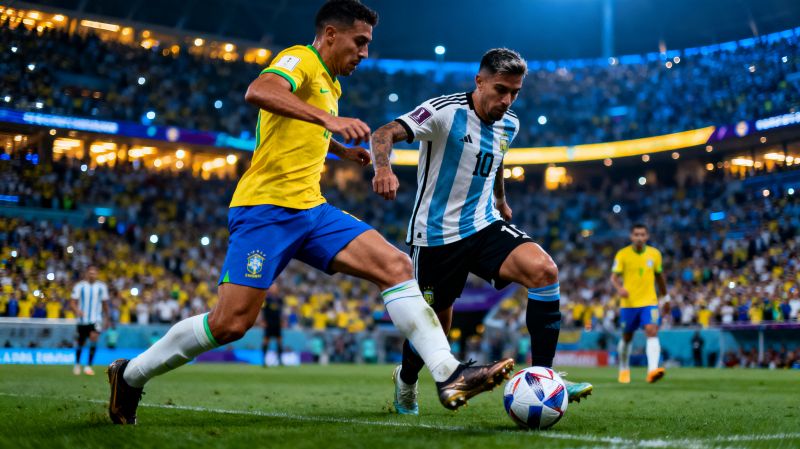
he 2019 AFC Champions League group stage clash between Beijing Guoan and FC Seoul at the Workers' Stadium still lingers in the memory of Chinese football fans. A 2-0 victory for the home side, courtesy of goals from Renato Augusto and Cedric Bakambu。felt like a statement: Beijing Guoan vs Seoul was no longer a one-sided affair. For years, the K League giants had dominated this matchup, but that night in Beijing, the balance shifted. The roar of 50,000 fans echoed long after the final whistle, and the result set the tone for a rivalry that has become one of the most compelling in Asian club football.Historically, FC Seoul held the upper hand. Their 2013 AFC Champions League final appearance and consistent domestic success gave them an aura of invincibility against Chinese sides. Beijing Guoan, despite their own pedigree。

often stumbled in Seoul—particularly at the Seoul World Cup Stadium, where the home crowd's relentless drumming and the team's high-pressing style unsettled Guoan's build-up play. I remember the 2014 round of 16 second leg: Seoul won 3-1, and Guoan's midfield was overrun by the tireless runs of Koh Myong-jin and Molina. That match exposed a recurring issue—Guoan's vulnerability to quick transitions. Yet, the tide turned in recent years. The 2019 win was followed by a 1-0 away defeat in Seoul, a result that flattered the hosts. Guoan's improved defensive organization, anchored by Kim Min-jae, and the tactical discipline under Bruno Genesio, made them competitive on Korean soil.What makes Beijing Guoan vs Seoul so intriguing is the stylistic contrast. Seoul favor a direct, physical approach, often launching long balls to target men like Park Chu-young or deploying wingers to stretch the backline. Guoan, on the other hand。rely on possession and intricate passing through the middle, with Renato Augusto and Zhang Xizhe pulling the strings. When these styles collide, the game becomes a chess match of pressing triggers and counter-pressing traps. In the 2020 AFC Champions League, a 3-1 Guoan win in Doha showcased this perfectly: Seoul's high line was repeatedly exposed by Guoan's quick vertical passes, and Bakambu's pace turned the game. The neutral venue, though, stripped away the intimidating atmosphere that usually defines this fixture. At the Workers' Stadium, the crowd's energy is a tactical weapon—Guoan players feed off it, while visiting Seoul sides often struggle to communicate.Individual battles add spice. The duel between Guoan's wing-backs and Seoul's wide forwards—think Li Lei against Ko Kwang-min—often determines the flow. Then there's the midfield scrap: Guoan's Renato Augusto, with his incisive through balls, versus Seoul's Osmar, a destroyer who reads the game impeccably. These matchups are not just about skill;they're about temperament. Augusto, a World Cup veteran, rarely panics, while Osmar's aggression can border on recklessness. I've watched Osmar commit needless fouls in key areas, handing Guoan free-kick opportunities that they've converted. Conversely, Guoan's defense has occasionally switched off—a lapse in concentration cost them in the 2018 group stage。when Seoul scored a late equalizer from a corner. These fine margins decide the outcome in a rivalry where both teams know each other inside out.
Looking ahead。the Beijing Guoan vs Seoul fixture remains a barometer for Chinese and Korean club football. The K League's financial constraints have narrowed the gap, while the CSL's spending caps have forced Guoan to rely more on academy products. That shift could redefine the rivalry. Guoan's youth setup, with players like Liu Guobo emerging, might inject fresh energy, but Seoul's experience in big games is undeniable. The next encounter—whenever it comes—will likely hinge on who adapts better to the other's rhythm. For now, the 2019 win stands as a turning point, but it's not a permanent shift. Seoul will be hungry to reclaim dominance. Guoan, with their passionate fanbase, will be equally determined to prove that night in Beijing was no fluke. This is a rivalry where history weighs heavy, but the present is always up for grabs.